


Comic Book Price Value Scanner
4.545.00 Reviews
App Specs
- Version
- 1.0.5
- Updated On
- License
- Free
- Downloads
- 10,000+
- Developer
- petraapps
- Categories
- Comics
- Platform
- Android
Screenshots
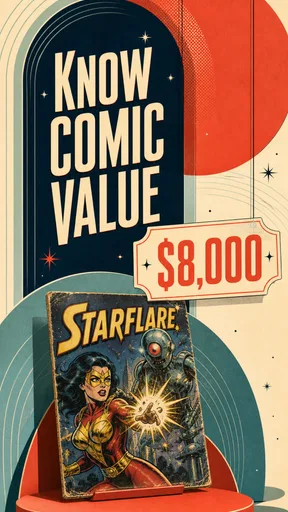
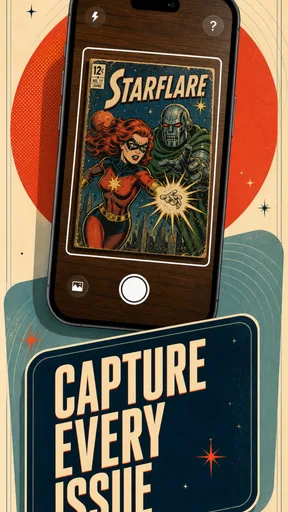
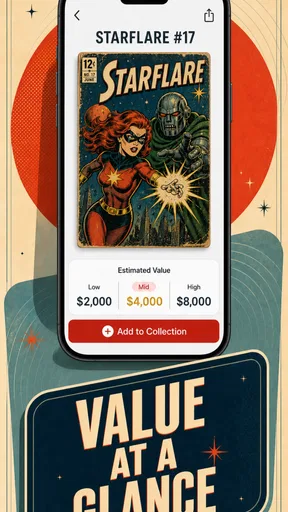
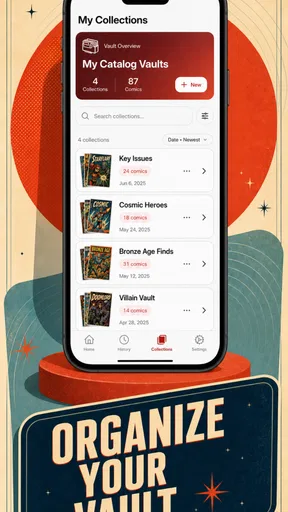
 Analysis by AppCompare
I’d think of Comic Book Price Value Scanner as a practical companion for the moment a comic catches your eye and you want to know more than what is printed on its cover. The app is built around identifying comics from cover scans, following their current values, and keeping a collection organized. That makes it more purposeful than a general camera app, but it also means the quality of the experience depends on how smoothly a scan can turn into useful information.
In my view, its most appealing use is not trying to predict a rare book’s future price. It is reducing the small bits of work that make collecting harder: identifying an issue, checking what it may be worth, and recording what you own. The important distinction is that a value tracker is a reference tool, not a guaranteed appraisal; condition, edition, and market context still matter when money is involved.
When a scan needs the network
I find it useful to separate a quick cover match from the parts that depend on a fresh lookup. That distinction helps me plan a scan instead of assuming every step will finish instantly, especially when I’m browsing somewhere with an uncertain signal. The next section looks at how I’d fit those checks into a real collecting trip.
Identification is only the beginning
A cover scan is a useful shortcut when I cannot remember a title or issue number, or when a book has been placed in the wrong section of a box. The camera gives the app something concrete to work from instead of making me type details from a cover. That is particularly handy with a stack of unfamiliar comics, where searching issue by issue can become tedious.
Identification and valuation are related, but they are not the same task. Recognizing a cover can point me toward the right comic, while a current price still needs to be interpreted in light of the copy in front of me. A crisp, well-preserved issue and one with a creased cover are not interchangeable just because they share an image. I would use the scan to narrow down what I have, then check the details before treating a displayed value as a buying or selling decision.
The emphasis on real-time values makes connectivity part of the app’s central appeal: a current reference is most useful when the app can reach the information behind it. When I am at a shop, that can help me decide whether to investigate a book further before paying. At home, it can make a collection review more informative than a handwritten list of titles. I would not assume that every part of the app behaves identically without a connection, so I’d plan scans and price checks for times when my phone has reliable service.
Use a scan to guide the next question
One practical workflow is to scan first, then compare the result with the printed issue information and the physical copy. That second look is a small step, but it guards against a common collecting mistake: trusting a visual match without checking whether the edition or issue is actually the one you own. If a result looks close rather than exact, I would treat it as a lead and verify it manually rather than add it to my collection immediately.
Worth Reading Before You Choose

Flipboard Shows What News Apps Must Do Beyond the Feed

Switching to Android Auto Means Rethinking Your Driving Routine

Google Calendar Makes a Crowded Week Easier to Manage

Ludo King Makes the Most of the Minutes Between Plans

Baby Panda World Brings Quick Play to Modern Phones, but Its Game Library Feels Busy

ESPN’s Live Game View Makes Following Close Games Easier
This also helps explain where the app sits among the usual alternatives. A camera can capture a cover, and a search engine can help identify a title, but neither automatically gives a collector the same joined-up path from recognition to valuation and collection management. On the other hand, a spreadsheet or notebook can be more flexible for unusual notes and personal grading conventions. I’d choose the scanner for quick identification and routine cataloguing, and keep a separate record if I needed highly customized condition notes.
How it fits into collecting away from home
Away from home, a phone is handy only if it supports the decision rather than taking over the hunt. I’d use a scan to flag a comic for closer inspection, then keep browsing while I confirm the issue and its condition; that way, a delay doesn’t turn a promising find into a rushed purchase. The next section considers what I’d do when either recognition or connectivity falls short.
At a shop, convention, or in front of a long box
Comic Book Price Value Scanner makes the most sense in a mobile situation where a decision is waiting. Imagine browsing a long box and finding an issue whose cover you recognize but whose number you cannot place. A scan can help you identify it, while a value check gives you a starting point for deciding whether to look more closely. The useful outcome is not a split-second verdict; it is knowing which book deserves a closer inspection.
There is a trade-off in that setting. Shops and crowded events can have weak or busy connections, and camera-based identification is less convenient if I feel rushed or cannot hold the phone steady. I would scan a few likely finds rather than attempt to process every comic in a box. That keeps the phone from becoming a distraction and makes it easier to compare results with the actual books.
At home, the same process can be less hurried. I can work through a small pile, confirm each match against its issue details, and add items to my collection as I go. This is a better fit for careful cataloguing than trying to scan an entire shelf in one session. If I sort by series or keep separate piles for books that need checking, I can catch mismatches before they become errors in the record.
Small habits that make cataloguing more reliable
I would start with the comics I most often forget, such as duplicates, books bought in a bundle, or issues that look very similar across a run. Those are the cases where a quick scan and a clear record can save repeat searching later. For books with similar covers, I would verify the issue number on the physical copy before saving the result. A scan is an efficient first pass, not a substitute for reading the book’s own identifying details.
Another useful approach is to separate “identified” from “fully checked.” A cover match may be enough to place a comic in the right series, but a value estimate is more meaningful after checking condition and edition. If I were preparing a collection for insurance or a serious sale, I would use the app as an organizing aid and then do more careful item-by-item verification. That keeps its convenience in perspective without discarding its value for everyday collecting.
What to do when a scan or connection disappoints
A disappointing result doesn’t have to become a bad catalogue entry. I’d treat a questionable match as unfinished, make a note of the printed issue details, and return to the lookup when I can give it a clearer view or steadier connection. That cautious recovery habit matters most when similar covers or a meaningful purchase make accuracy more important than speed.
Recover without turning a guess into a record
Any scanner can produce a result that needs another look, especially when covers are worn, obscured, reflective, or visually similar. If a scan seems wrong, I would first improve the view: place the comic flat, avoid glare, and frame the cover so its main artwork is visible. Then I’d compare the proposed match with the printed title and issue information. This simple check is more useful than repeatedly scanning the same image and accepting whichever result appears first.
If the network is unreliable, I would pause rather than assume that a value is current or that an incomplete lookup has finished. It is sensible to retry when the connection is steadier and avoid recording an uncertain match as a confirmed item. In a shop, I might note the issue details for later checking; at home, I can return to the comic when the lookup works again. That is a practical fallback, not a claim that the app has a particular offline mode.
There is also a difference between a lookup that fails and a comic that is hard to identify. A low-quality image, an unfamiliar edition, or a cover that resembles another issue can all complicate recognition. For a valuable book, I would not let convenience override verification. The app can help me find the likely identity and a useful price reference, but I’d still inspect the comic and seek a more specialist opinion if the stakes justified it.
Keep expectations realistic about value
Price information is most helpful as a way to frame a decision, not as a promise of what a particular copy will sell for. A collection tracker can make it easier to see what you have and follow changing values, but the physical condition of each comic remains a major part of the story. I would be cautious about comparing a displayed figure with an online asking price as though either one automatically represents a completed sale.
This is where the app will suit casual and committed collectors differently. Someone who wants a quick overview of a personal collection may find the value feature motivating and convenient. A dealer or collector making a high-value transaction will likely want additional checks, particularly around grading and edition details. The scanner is strongest when it speeds up routine discovery; it is less suited to replacing specialist judgment.
Data-conscious use and practical fit
I’d also think about how often I actually need a scan before building the app into my routine or considering a purchase. A small, deliberate batch is easier to verify than processing every comic on impulse, and it keeps the tool focused on the books where identification or value context helps. The final section weighs that practical approach against the app’s broader fit for a collector.
Choose what you scan and when
Because scanning and current-value lookups are the main reasons to use the app, I would use them deliberately rather than treating every book as something that must be processed immediately. A focused session—one box, one series, or one group of recent purchases—makes it easier to catch mistakes and avoids turning a hobby into endless phone work. If I am browsing in a place with a poor signal, I can wait until later to do a careful lookup rather than repeatedly trying to force one in the aisle.
The app is free to download, with in-app purchases listed from $5.49 to $69.99 per item. I would check what a purchase offers and whether it matches my collecting habits before spending. Someone who only identifies the occasional comic may be content to begin without paying, while a collector who expects to use valuation and collection tools frequently should consider the available purchase terms carefully. The range is broad enough that it is worth making that decision based on actual use, not on the assumption that every feature is essential.
Comic Book Price Value Scanner is from petraapps, and its current version is 1.0.5. It has a 4.5 average from 451 ratings, alongside 45 written reviews, and has passed 10K+ installs. It is free, rated for Everyone, and was released on Dec 4, 2025. Those figures suggest an established audience for a focused collecting tool, but they do not tell me whether its recognition will match every comic on an individual shelf. I would still judge it by how well it handles the kinds of books I actually collect.
Who will appreciate it—and who may prefer another method
I’d recommend it to collectors who often encounter books away from home, forget issue details, or want a more convenient way to maintain a working inventory. It is also a sensible fit for someone starting to organize a collection and looking for a bridge between cover recognition and price research. The app’s narrow purpose is a strength for those users: it concentrates on comic identification and collection-related tasks rather than trying to be a general-purpose organizer.
I would skip it if I wanted a fully customizable archival catalogue above all else, or if I rarely need to identify comics and already have a dependable system. A spreadsheet can be better for tracking personal purchase prices, grading notes, storage boxes, and other fields in exactly the way I prefer. For a rare or expensive book, a specialist reference or expert assessment is a better companion than relying on a scanner alone. The right choice depends on whether speed and convenience matter more than complete control.
My connectivity verdict
What I like about Comic Book Price Value Scanner is the practical sequence it offers: use a cover to identify a comic, check a current value, and keep the collection in order. Its best moments are likely to happen when I have a clear view of the book and a dependable connection, whether I am sorting comics at home or checking a promising find in a shop. It can make those small collecting tasks feel less scattered.
The main caution is to treat both identification and pricing as useful guidance that deserves a quick human check. Network access matters most when I want a current lookup, and a slow or unreliable connection can interrupt the very task that makes the app attractive. I would not depend on it as the sole authority for a high-stakes sale, but for everyday discovery and collection upkeep it has a clear role.
Overall, I’d give it a try if scanning and valuing comics are regular parts of my hobby. I would keep my expectations grounded, verify close-looking issues, and decide on any in-app purchase only after seeing how often I reach for it. For a collector who wants a faster route from cover to catalogue entry, that is a useful proposition; for someone who needs deep customization or formal appraisal, a different tool—or a combination of tools—will be a better fit.
Pros
- Quickly scans comic barcodes to look up issue details and estimated values.
- Useful for checking a comic’s potential worth before buying or selling.
- Helps collectors identify issues without searching manually.
- Can make sorting and reviewing a collection more convenient.
- Offers a focused tool for comic collectors and resellers.
Cons
- Estimated prices may not match actual sale prices or local market demand.
- Some comics may lack barcode data or be difficult to scan.
- A clear
- undamaged barcode is needed for reliable scanning.
- Price information may not reflect a comic’s grade or condition.
- The app’s usefulness depends on the coverage and freshness of its database.
FAQs for Comic Book Price Value Scanner
What does Comic Book Price Value Scanner do?
Comic Book Price Value Scanner is designed to help users identify comic books and look up pricing information, typically by scanning or photographing a cover. It can be useful when sorting a collection, checking a shop purchase, or preparing items for sale. Treat the result as an estimate rather than a formal appraisal: editions, printings, condition, and recent completed sales can all affect what a comic is actually worth.
How accurate are the comic book values shown in the app?
Values from a scanning app can offer a helpful starting point, but they are not guaranteed sale prices. A cover match may not distinguish every variant, printing, or issue detail, and condition has a major effect on value. For a better estimate, confirm the issue and edition, assess defects carefully, and compare recent sales of the same comic in similar condition rather than relying on a single displayed figure.
Can I use the app to scan any comic book?
Scanning may work best when a comic has a clear, recognizable cover and enough light for the camera to capture its details. Older, damaged, unusually printed, or variant covers may be harder to identify, and a scan can sometimes return a similar but incorrect issue. Check the information the app provides against the comic itself, such as its title, issue number, publisher, and publication details.
Is Comic Book Price Value Scanner free, and are there in-app purchases?
Pricing and access can vary by platform and may change over time. Before downloading, check the app’s current Google Play Store or Apple App Store listing for its price, subscription terms, in-app purchases, and any limits on scans or features. If the app offers a trial or recurring plan, review the renewal and cancellation details carefully so you understand any charges before signing up.
Does the app guarantee that I can sell my comics for the prices it shows?
No scanner can guarantee a sale at a displayed price. A comic’s final selling price depends on its condition, edition, buyer interest, location, and the marketplace used; fees and shipping can also reduce what you receive. Use the app’s estimate as one reference point, then check comparable completed sales and, for a particularly valuable book, consider getting an opinion from a knowledgeable dealer or professional grader.


